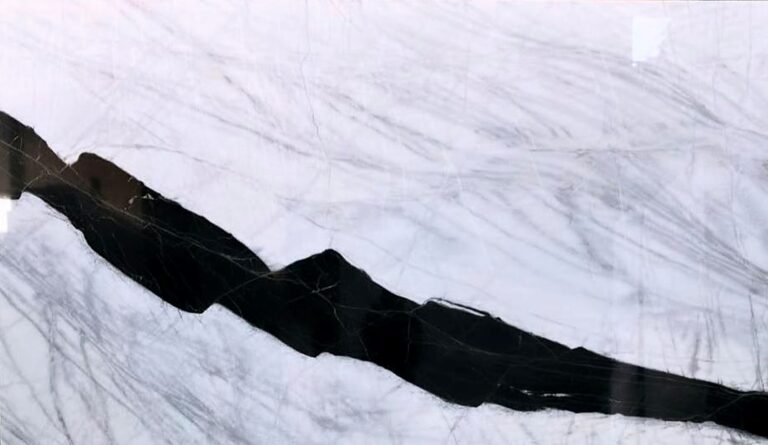
Travertine has been used in architecture for thousands of years, but vein-cut travertine gives the stone a distinctly modern look. Instead of the soft, cloudy pattern most people picture, vein-cut slabs show crisp parallel bands of colour that suit clean contemporary facades, pool areas and feature walls.
Here is what vein-cut means, how our two Persian travertines differ, and how to choose the right finish for your project.
What does vein-cut mean?
Travertine forms in layers over thousands of years. When the block is sliced against those natural layers, rather than along them, the cut reveals the bedding as long, linear stripes. This is called vein-cut. The result is a strongly directional, architectural surface that looks deliberate and tailored on large areas.
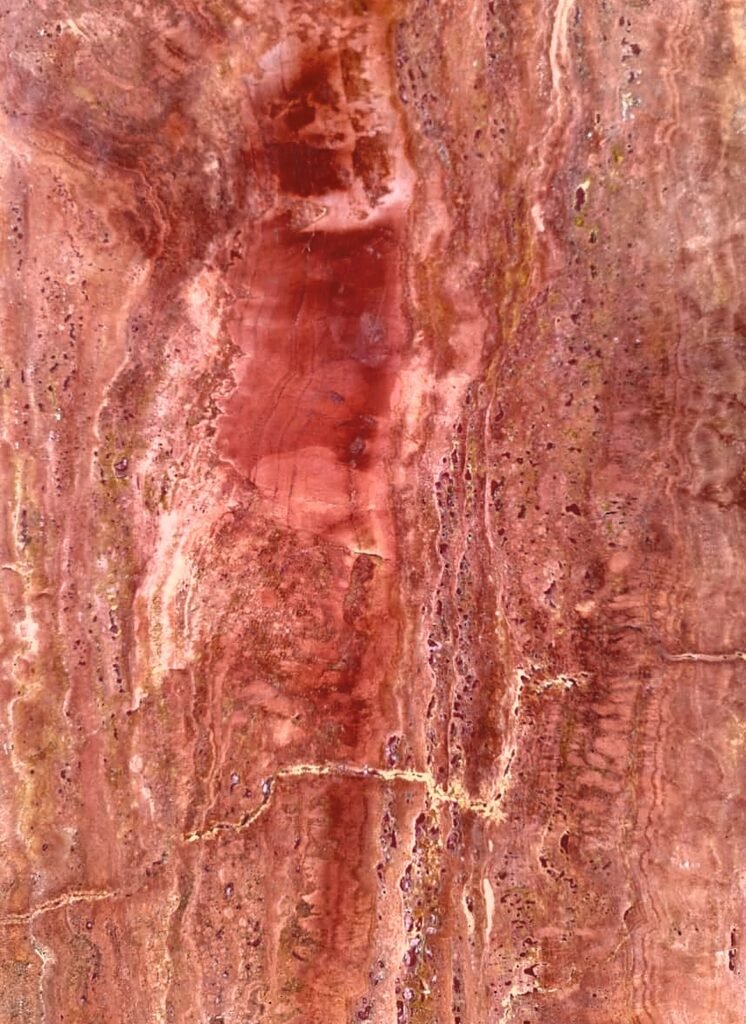
Persian Red or Persian Silver?
Our Travertine Collection focuses on two vein-cut Persian stones with very different personalities:
- Persian Red Travertine: deep terracotta and crimson, banded with ribbons of gold. A bold architectural statement for feature walls, facades and warm-toned interiors.
- Persian Silver Travertine: sleek, strictly parallel bands of charcoal, silver-grey, taupe and white. Calm, contemporary and easy to pair with glass, steel and timber.
Filled or unfilled?
Travertine naturally contains small pores and voids. You can keep them open for an authentic, textured look, or have them resin-filled for a smooth, closed surface.
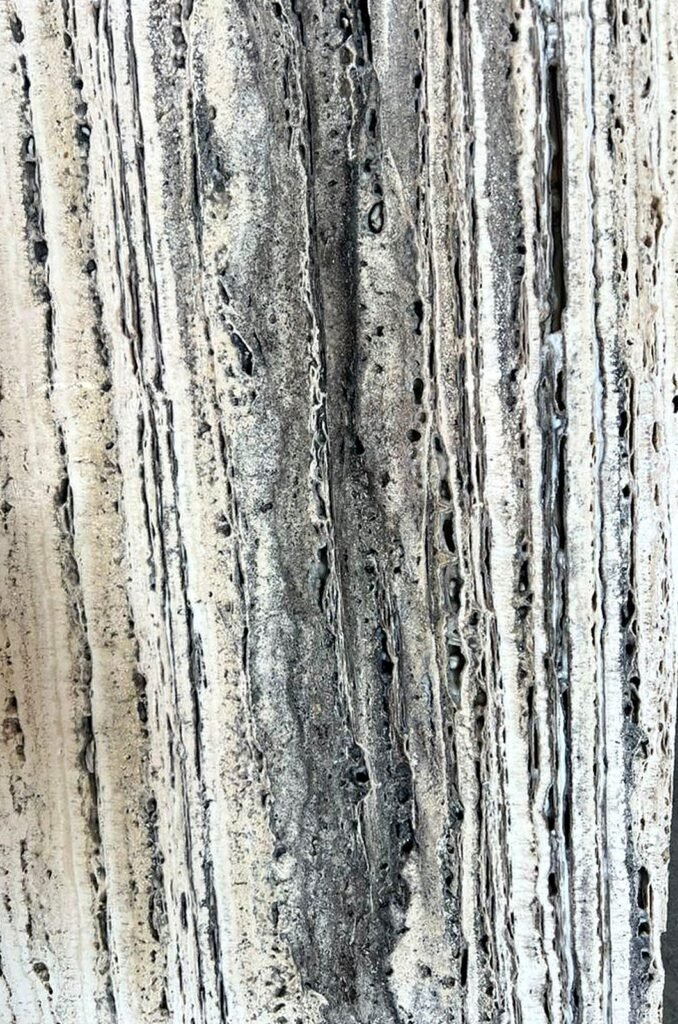
- Unfilled suits exterior cladding and feature walls where texture adds character.
- Filled suits worktops, vanity tops and interior floors where a smooth, easy-clean surface matters.
Inside and out
Travertine is durable and weather-resistant, so it performs as well on a building facade or pool surround as it does on an interior feature wall. For wet or outdoor floors, talk to us about the finish before ordering so the surface suits the conditions underfoot.
Caring for travertine
Like all calcium-based stone, travertine is sensitive to acids. Seal it after installation, reseal periodically in high-use or outdoor areas, and clean with a pH-neutral stone cleaner. Avoid bleach, vinegar and acidic pool chemicals splashing onto the surface for long periods.
Plan your travertine project
Send us your drawings, quantities and delivery destination and request a quote. We will reply with current slab photos, available sizes and pricing. You can also download the catalogue to share with your architect or fabricator.